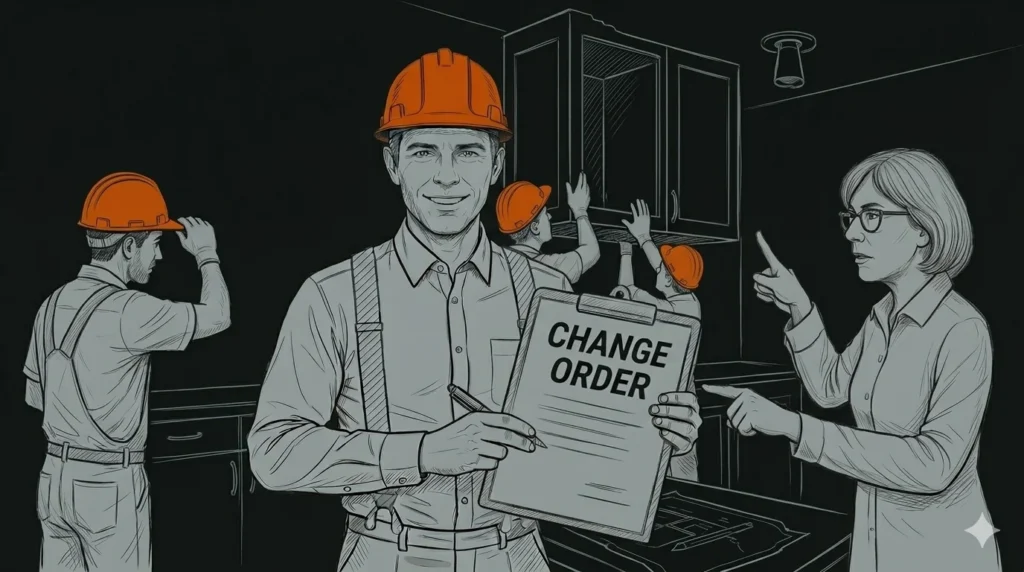
The scope changed. You did the extra work. Now the GC or owner refuses to pay because you did not get a signed change order. Sound familiar? You are not alone. This is one of the most common and frustrating disputes contractors and subcontractors face on Florida job sites.
The short answer is that Florida law gives you a few ways to recover payment even without a signed change order. But whether you actually collect depends on your contract, the facts on the ground, and the proof you can put in front of a judge. This article breaks down your options under Florida change order law and what you need to do to protect yourself on every job.
What Is a Change Order and Why Does It Matter?
A change order is a formal amendment to a construction contract. It documents a change in scope, cost, or schedule that both parties agree to after the original contract is signed. Many construction contracts require change orders to be in writing and signed by both parties before any additional work begins.
Construction does not always work that way. A project manager calls and says get it done. A field directive comes with no paperwork. A text message says go ahead. You do the work because the job is moving and you need to keep pace. Then the invoice comes back unpaid and the other side points to the contract clause that says no changes without a signed order.
That is where Florida change order law comes in.
When Florida Courts Enforce the Written Requirement
If your contract contains a clause requiring all changes to be in writing and signed by both parties, Florida courts often enforce it strictly. The written change order requirement exists for a reason. It protects both sides from disputes about what was authorized, what it cost, and who approved it.
If your contract has this language and you performed extra work without a signed order, you are starting from behind. That does not mean you are out, but it means your path to payment runs through legal theories rather than the contract itself. Understand that going in.
Three Legal Theories That May Help You Get Paid
Florida courts have allowed contractors and subcontractors to recover payment for extra work even without a signed change order. Here are the three strongest arguments.
1. Course of Conduct
If the GC or owner regularly approved changes without signed orders throughout the project and paid for them, the court may find that the parties’ own conduct waived the written requirement. The argument is straightforward: if they paid for the last three verbal changes without a signed order, they cannot suddenly hide behind the contract clause for this one.
To make this argument, you need evidence of the pattern. Emails confirming prior verbal approvals, invoices for similar extra work that were paid without a signed order, and testimony from people on the job who witnessed how changes were handled. The pattern has to be clear and consistent.
2. Unjust Enrichment
If the owner received the benefit of your extra work and refused to pay for it, you may have a claim for unjust enrichment. The theory is simple: it would be fundamentally unfair for the owner to keep the value of work they knowingly accepted without paying for it.
To succeed on unjust enrichment, you need to show that the owner knew the extra work was being performed, accepted the benefit of it, and that allowing them to keep that benefit without paying would be unjust. This claim exists outside the contract and does not require you to prove the change was formally authorized.
3. Quantum Meruit
Quantum meruit means as much as is deserved. Even without a valid change order, a court may award you the reasonable value of the extra work you performed if you can show the work was authorized, you delivered value, and the other side accepted it.
Quantum meruit is particularly useful when the contract itself is disputed or unenforceable. It gets you to a fair recovery based on what the work was actually worth, not what a voided contract said it would cost.
| You did the work. The scope changed and you delivered. Getting paid for it is a different fight. Call Martin Law, PLLC before you walk away from money you earned. |
What You Need to Prove: Documentation Is Everything
Regardless of which legal theory you pursue, your evidence is what wins or loses the case. A contractor with a solid paper trail is in a fundamentally different position than one who relied on a verbal handshake and nothing else.
Here is what you need to build your case:
- Emails, texts, or field directives showing the change was requested or approved
- Daily logs and field tickets documenting when the extra work was performed
- Photographs and video of the work in progress and on completion
- Invoices and delivery receipts for materials tied to the extra scope
- A history of similar unsigned changes being paid on the same project
- Testimony from supervisors, foremen, or coworkers who witnessed the approval
The moment someone tells you to do extra work without a signed order, start documenting. Send a confirming email that same day. Something as simple as: ‘Per our conversation this morning, we will proceed with the additional scope at the agreed rate. Please confirm.’ That email, even without a reply, is evidence that you put the other side on notice. If they had a problem with it, they had a chance to say so.
Can You File a Lien for Extra Work Without a Signed Change Order?
Yes. Florida’s construction lien law allows you to file a lien for extra work even without a signed change order, as long as the work improved the property, you complied with the lien requirements including the Notice to Owner, and you recorded your Claim of Lien within 90 days of the last day you furnished labor or materials on the project.
Florida courts have enforced liens for extra work where the contractor could show the work was requested, accepted, and improved the property, regardless of whether a formal change order existed. The lien is often your most powerful tool to force payment, because it puts the owner’s property at risk.
Protect Yourself Before the Next Job: Contract Language That Works
The best time to solve a change order dispute is before it happens. One well-drafted contract clause can make the difference between getting paid and spending money on litigation.
Consider adding language like this to every contract:
“Due to the nature of construction projects, some changes may be authorized verbally or via field directive. Such changes shall be valid and compensable whether or not a written change order is signed.”
This clause does not eliminate the change order process. It acknowledges the reality of how construction jobs actually run and protects you when paperwork falls behind the work. Pair it with a strict personal practice of confirming every verbal authorization in writing the same day, and you have a much stronger position if a dispute arises.
The Best Practice: Do Not Skip the Paper Trail
Florida law gives you options when a signed change order is missing. But every one of those options is harder, more expensive, and less certain than simply having the signature. The legal theories exist as a safety net, not a substitute for good documentation habits.
On every job, before you start any extra work:
- Ask for the change order in writing. Even a text message confirmation is better than nothing.
- Send a confirming email if you get a verbal go-ahead. Put the scope, the cost, and the authorization in one sentence and send it before the work starts.
- Keep your daily logs current. Date, scope, who authorized it, and who was present. Contemporaneous records carry far more weight than something reconstructed after a dispute begins.
- Invoice promptly for extra work. A paid invoice for similar unsigned work is some of the best evidence you can have that the other side accepted verbal changes.
Good documentation habits cost almost nothing. A change order dispute that goes to litigation can cost everything. Build the habit before the next job starts.
Frequently Asked Questions
Q: Can I sue for extra work if there is no signed change order in Florida?
Yes. Florida courts have allowed contractors to recover payment for extra work without a signed change order under several legal theories, including course of conduct, unjust enrichment, and quantum meruit. Success depends on your contract language, the facts of the job, and the documentation you can produce. The stronger your paper trail, the stronger your case.
Q: What if my contract says all changes must be in writing?
Florida courts often enforce written change order requirements strictly. But they have also found that a party’s conduct can waive that requirement. If the GC or owner regularly approved verbal changes and paid for them throughout the project, their course of conduct may override the contract clause. You need evidence of that pattern to make the argument.
Q: What is quantum meruit and how does it help contractors?
Quantum meruit is a legal theory that allows a court to award the reasonable value of work performed, even without a valid contract or change order. To recover under quantum meruit, you need to show the work was authorized, you delivered value, and the other side accepted it. It is a powerful tool when the contract itself is disputed or when no formal change order was ever signed.
Q: Can I file a construction lien for extra work without a signed change order?
Yes. Florida lien law allows you to lien for extra work that improved the property, as long as you complied with the Notice to Owner requirement and recorded your Claim of Lien within 90 days of your last furnishing.
Q: What evidence do I need to get paid for extra work without a signed change order?
The more documentation the better. Emails, texts, or field directives showing the work was requested or approved. Daily logs with dates and authorizations. Photos of the work. Invoices tied to the extra scope. A history of similar unsigned changes being paid on the same project. The case is built on paper, not on what someone said on a job site.
Q: How do I protect myself from change order disputes on future jobs?
Start with a contract clause that acknowledges verbal and field-directed changes and makes them compensable when performed in good faith. Then make it a personal rule to confirm every verbal authorization in writing the same day, even by text. Keep your daily logs current, invoice promptly, and never start extra work without at least a written confirmation of the scope and cost. Good habits before the job starts are worth far more than legal theories after a dispute begins.
Q: Does the owner have to pay for extra work they accepted even without approving it?
Possibly. Under unjust enrichment, an owner who knowingly accepts the benefit of extra work without paying for it may be required to compensate the contractor for the reasonable value of that work. The key is showing the owner knew the work was being performed, accepted it, and that allowing them to keep the benefit without paying would be unjust. This is a fact-specific argument and the strength of your documentation determines whether it holds up.
Key Takeaways
| Key Takeaways Florida law gives contractors several paths to recover payment for extra work without a signed change order, including course of conduct, unjust enrichment, and quantum meruit. If your contract requires written change orders and you skipped that step, you are starting from behind. You are not out, but your path to payment runs through legal theories, not the contract. Course of conduct can override a written change order requirement if you can show the other party regularly approved and paid for verbal changes on the same project. Documentation is everything. Emails, texts, daily logs, field tickets, and photos are the difference between winning and losing a change order dispute. Send a confirming email every time you get a verbal go-ahead. Put the scope, the cost, and the authorization in one sentence before the work starts. You can file a construction lien for extra work without a signed change order. Add a contract clause acknowledging verbal and field-directed changes. It costs nothing to include and protects you every time paperwork falls behind the work. The best change order protection is a good documentation habit. A confirming email costs nothing. Litigation costs a lot more. |
| Get Paid for the Work You Did: Call Martin Law, PLLC Change order disputes are winnable, but they are evidence-dependent and contract-specific. The sooner you get a Florida construction attorney involved, the better your position. Waiting until a dispute becomes a lawsuit means the other side has already built their case. Do not walk away from money you earned because the paperwork was not perfect. Contact Martin Law, PLLC for straightforward advice from a Florida construction attorney who works with contractors and subcontractors every day. |
About the Author
John C. Martin, Esq. is a Florida construction law attorney and the founder of Martin Law, PLLC. He represents contractors, subcontractors, and suppliers throughout the state of Florida.
Disclaimer
This article is for general informational purposes only and does not constitute legal advice. Reading this content does not create an attorney-client relationship. Always consult a qualified Florida construction law attorney regarding your specific situation.